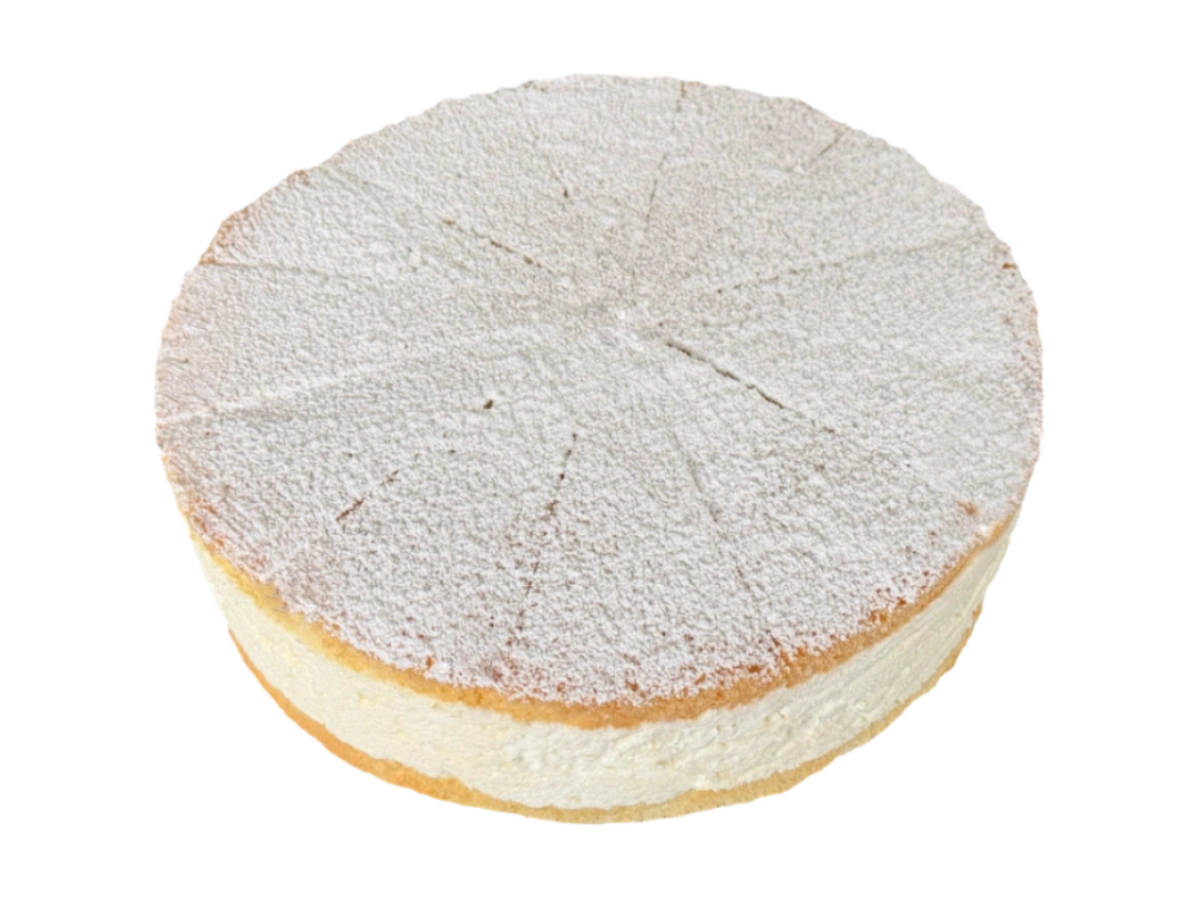
Quark Cream Cake combines finely layered sponge with a generous quark and cream filling. Lemon zest and a light dusting of powdered sugar round out its balanced flavor with a delicate citrus note.
Print recipe
Save on Pinterest
Servings: 12
Nutrition Facts
Quark Cream Cake without Gelatin Recipe
Serving Size
1 Slice
Amount per Serving
Calories
729
% Daily Value*
Fat
44.4
g
68
%
Saturated Fat
25.8
g
161
%
Sodium
205
mg
9
%
Carbohydrates
64.3
g
21
%
Fiber
0.4
g
2
%
Sugar
45.1
g
50
%
Protein
18.5
g
37
%
* Percent Daily Values are based on a 2000 calorie diet.
Already tried this recipe?Thank you for your rating.
Equipment
- Electric hand mixer
- Springform pan (26 cm / 10 inches diameter)
- Silicone scraper (about 30 cm / 12 inches long)
- Stainless steel cake lifter (about 28 cm / 11 inches wide)
- Digital kitchen scale (with tare function, up to 5 kg / 11 lb capacity)
- 3 Offset spatulas for cakes (stainless steel)
- Cake layer divider (stainless steel, about 32 cm / 12.5 inches long, with serrated cutting wire)
- Whisk
- Cake ring (adjustable, 10 cm / 4 inches high, up to 30 cm / 12 inches diameter)
- Flour sifter or fine-mesh sieve (for flour, cornstarch and baking powder)
- Fine-mesh sieve (for powdered sugar)
Ingredients
Sponge cake
- 6 Eggs (size L)
- 180 g White sugar (about 3/4 cup plus 2 1/2 tbsp)
- 8 g Vanilla sugar (1 packet; about 2 tsp)
- 6 tbsp Warm water
- 125 g Flour (about 1 cup; German wheat flour type 405)
- 1 pinch Salt
- 75 g Cornstarch (about 2/3 cup)
- 1 tsp Baking powder
Quark and cream filling
- 900 g Quark (20% fat in dry matter; about 4 cups)
- 1500 g Whipping cream (30% fat; about 6 1/4 cups)
- 200 g Küchle San-apart (cream stabilizer; about 9 1/2 tbsp / 0.6 cup)
- 48 g Whipping cream stabilizer (Sahnesteif) (6 packets of 8 g; about 1 packet per cup of cream)
- 100 g White sugar (about 1/2 cup)
- 2 tsp Vanilla paste
- 1 Organic lemon (finely grated zest)
- 1 pinch Salt
Topping
- 2 tbsp Powdered sugar
Instructions
Egg yolks, egg whites, and dry ingredients
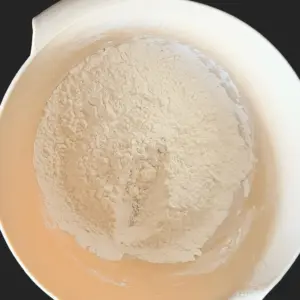
- Thoroughly whisk together the measured flour, cornstarch, and baking powder in a bowl until evenly combined. Carefully separate the eggs. Yolks: In a large bowl, beat the egg yolks with 6 tbsp warm water, 120 g sugar, and the vanilla sugar with a hand mixer for about 10 minutes, until pale and creamy. The yolk mixture should become noticeably lighter and increase visibly in volume, while the sugar is incorporated as evenly as possible. Whites: Beat the egg whites with the pinch of salt and the remaining 60 g sugar until stiff peaks form.
Make the sponge cake batter
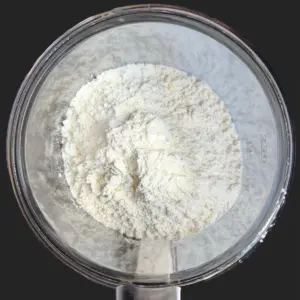
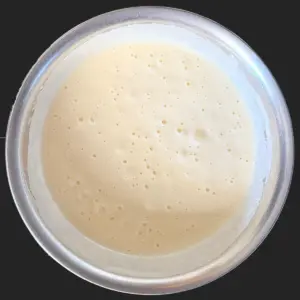
- Preheat the oven to 175°C / 350°F (conventional, non-fan oven). Line the base of the springform pan with parchment paper and secure it neatly in the pan. Carefully fold the stiff egg whites into the beaten egg yolk mixture until the two mixtures are lightly combined. Then gradually sift in the previously mixed dry ingredients and fold them in carefully, for example with a spoon or hand whisk, so the sponge cake batter retains its airy structure. Carefully pour the sponge cake batter into the pan and smooth the surface evenly with the scraper.
Bake and cool the sponge cake
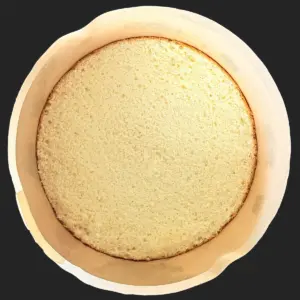
- Place the pan in the preheated oven and bake for about 33 minutes. Starting at around 30 minutes, test the sponge cake with a wooden skewer or the tip of a knife: insert it into the center of the sponge cake, all the way down to the bottom. Once no wet batter clings to the skewer or knife tip, the sponge cake is done and can be removed from the oven. Carefully remove the springform ring after a short cooling period. Then allow the sponge cake to cool completely to room temperature, for example by baking it in the evening and leaving it covered overnight at room temperature. The sponge cake must be completely cooled before continuing with the recipe.
Cut the sponge cake and prepare the cake ring
- Adjust the cake layer divider so that the lower cutting wire first removes only the dome that formed during baking. Then cut a slice about 2 cm / 3/4 inch high for the bottom sponge layer and a slice about 1 cm / 3/8 inch high for the later top of the cake. Set the 1 cm / 3/8 inch top slice aside for now. It will be placed on the quark and cream mixture later: Turn the slice over so that its smooth underside faces upward, then divide it into 12 even segments. Later, arrange the segments in a circle as the top sponge layer of the cake. The remaining sponge cake is kept as a reserve; the exposed cut edges will later be covered with powdered sugar. Place the 2 cm / 3/4 inch bottom sponge layer in the center of a cake plate. Cut a strip of parchment paper 11 to 12 cm / about 4 1/4 to 4 3/4 inches high, lightly grease the inside of the cake ring with rapeseed oil, and place the parchment paper inside without any folds. Close the cake ring snugly around the bottom sponge layer so that there is as little gap as possible between the sponge cake and the parchment paper.
Prepare the quark base and whipping cream portions
- Place the cold quark, sugar, vanilla paste, lemon zest, and salt in a large mixing bowl and briefly mix on low speed until the mixture is smooth and the sugar is well distributed. Briefly beat 750 g chilled whipping cream. With the hand mixer running, slowly sprinkle in 100 g San-apart and 24 g whipping cream stabilizer, then continue beating only until the cream is thickened to a lightly creamy consistency. It should still flow softly and should not form stiff peaks. Immediately incorporate this portion of cream into the quark base. Only then prepare the second portion with 750 g whipping cream in the same way and incorporate it into the quark base as well.
Fill the cake and arrange the sponge segments
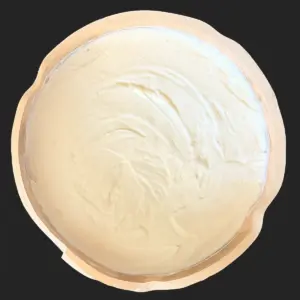
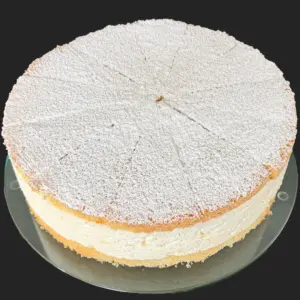
- Immediately add the finished quark and cream mixture to the prepared cake ring in portions. Build up the mixture in about 3 layers, first distributing each layer around the outer edge and then filling the center. Gently settle and smooth each layer to prevent air pockets from forming against the parchment paper. Do not press down firmly or work the mixture for too long. The finished cake will reach a total height of about 8 cm / 3 inches; the 10 cm / 4-inch cake ring provides working room and does not need to be filled completely. Finally, smooth the surface with an offset spatula, arrange the 12 sponge cake segments in a circle, and press them down only lightly. A narrow gap may remain between the segments so the cake can be portioned neatly later. Chill the cake in the refrigerator for at least 3 hours. After chilling, carefully remove the cake ring and parchment paper. Dust the surface of the quark cream cake evenly with powdered sugar.
Notes
Sponge cake
Process the egg yolks and egg whites separately so the sponge cake is fine-textured, stable, and easy to slice cleanly. Do not dissolve the sugar in the water; instead, incorporate it into the yolk mixture and egg whites. Thoroughly combine the flour, cornstarch, and baking powder, sift twice, and fold in gently to retain the airy structure. Bake the batter immediately and allow the sponge cake to cool completely before cutting.
Quark and cream mixture
Keep all ingredients for the quark and cream mixture cold throughout. Use quark with 20% fat in dry matter. Do not mix San-apart into the quark; add it entirely to the whipping cream. Beat the cream only until thickened to a lightly creamy consistency, then immediately incorporate each portion into the quark base. Fill the finished mixture in about 3 layers, first distributing it around the edge and then filling the center. The final stability develops in the refrigerator.
Already tried this recipe?Thank you for your rating.