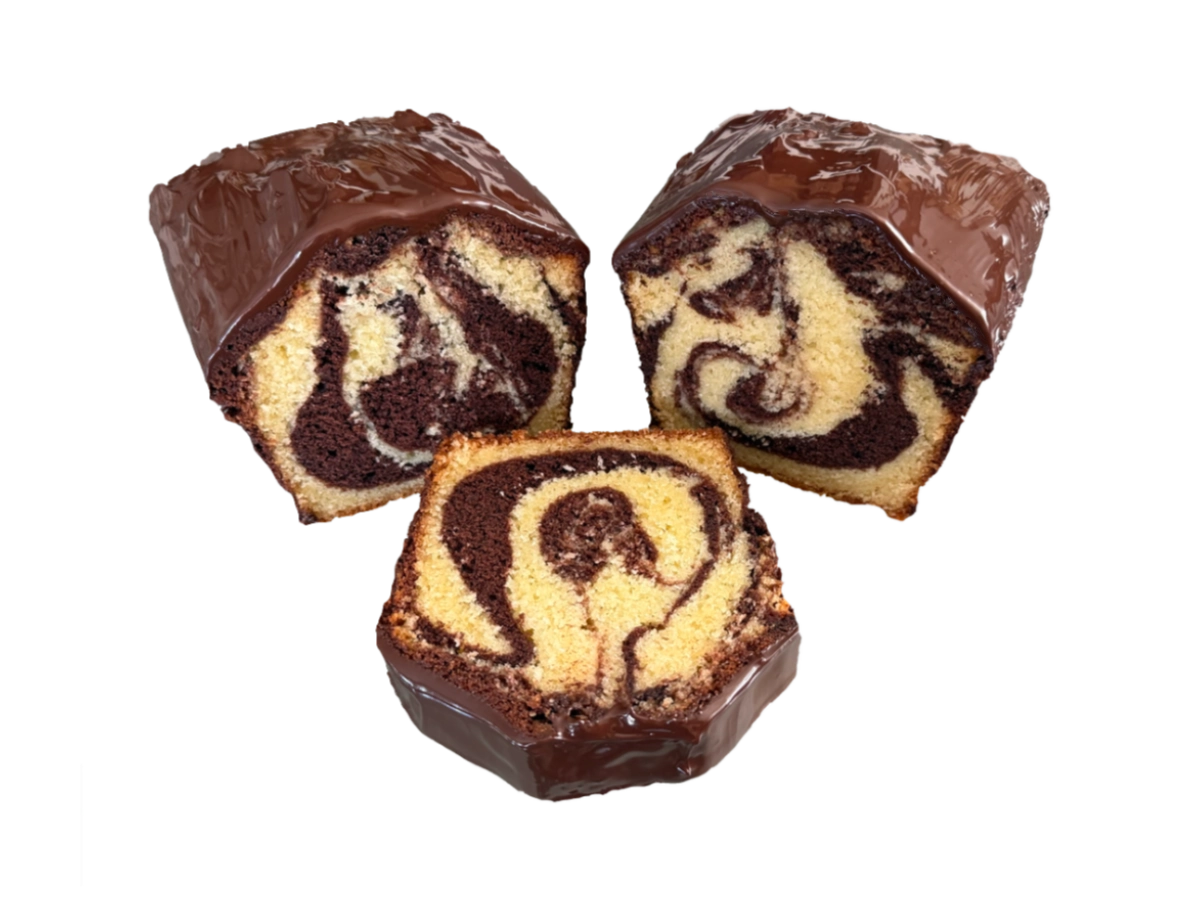
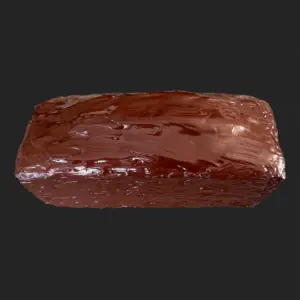
Marble cake with vanilla and cocoa batter and a clearly defined marbled pattern. A generous dark chocolate glaze adds rich flavor and creates a distinctive chocolate layer across the top of the finished cake.
Print recipe
Save on Pinterest
Servings: 14
Nutrition Facts
Marble Cake with Chocolate Glaze Recipe
Serving Size
1 Slice
Amount per Serving
Calories
374
% Daily Value*
Fat
20
g
31
%
Saturated Fat
7.5
g
47
%
Sodium
207
mg
9
%
Carbohydrates
40.6
g
14
%
Fiber
2.6
g
11
%
Sugar
21.9
g
24
%
Protein
6.6
g
13
%
* Percent Daily Values are based on a 2000 calorie diet.
Already tried this recipe?Thank you for your rating.
Equipment
- Electric hand mixer
- 1 Loaf pan (25 cm / about 10 inches long)
- Silicone scraper (about 30 cm / 12 inches long)
- Stainless steel cake lifter (about 28 cm / 11 inches wide)
- Digital kitchen scale (with tare function, up to 5 kg / 11 lb)
- Whisk
- 1 Saucepan (for the water bath)
- 1 Heatproof bowl (for melting the chocolate)
- Fine-mesh sieve
- Wire cooling rack
Ingredients
Vanilla batter
- 200 g Sunflower margarine (about 14 tbsp; for baking, 80 % fat)
- 200 g White sugar (about 1 cup)
- 1 pinch Salt
- 4 Eggs (size L)
- 2 tsp Vanilla paste
- 350 g Flour (about 2 3/4 cups; Type 405)
- 12 g Baking powder (about 3 tsp)
- 130 ml Whole milk (about 1/2 cup; room temperature)
Cocoa batter
- 20 g Cocoa powder (about 1/4 cup; unsweetened)
- 10 g White sugar (about 2 1/2 tsp)
- 10-30 ml Whole milk (about 2 tsp to 2 tbsp; room temperature, as needed)
Chocolate glaze
- 200 g Dark couverture chocolate (about 7 oz)
- 2 tsp Rapeseed oil
Instructions
Preparation
- Take the sunflower margarine, eggs, and whole milk out of the refrigerator early enough so they can come to room temperature before mixing. Preheat the oven to 180 °C / 350 °F conventional heat. Lightly grease a 25 cm / 10-inch loaf pan with margarine and dust it with a little flour. Tap out any excess flour. Alternatively, line the pan neatly with parchment paper.
Prepare the vanilla batter
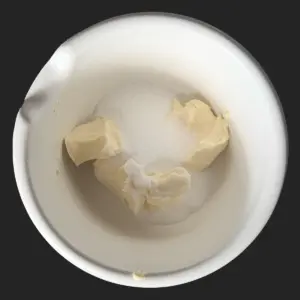
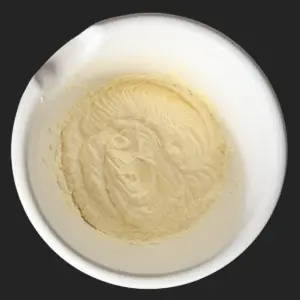
- Beat the soft sunflower margarine with the sugar and salt for about 3 minutes on medium to high speed until light and creamy. Add 2 eggs and mix well until they are mostly incorporated. Add the remaining 2 eggs and mix again until the batter is smooth and evenly combined. Briefly mix in the vanilla paste.
- Sift the baking powder together with the first portion of flour directly into the batter through a fine-mesh sieve and mix briefly on low speed. Gradually add the remaining flour, alternating with the whole milk. Mix on low speed only until a smooth batter forms and no dry flour remains. Do not mix longer than necessary.
Prepare and layer the cocoa batter
- Transfer about one-third of the finished vanilla batter to a second bowl. Add the 10 g white sugar and briefly mix on low speed. Sift the cocoa powder directly over the batter in several portions through a fine-mesh sieve. After each addition, briefly mix in the cocoa on low speed. Add 10 ml whole milk and briefly mix to combine. If needed, gradually add more whole milk, mixing briefly and checking the consistency after each addition. Stop adding milk as soon as the cocoa batter reaches a consistency as close as possible to that of the vanilla batter. Use no more than 30 ml whole milk in total. The cocoa batter should be neither noticeably thicker nor noticeably thinner than the vanilla batter.

- Spread about half of the vanilla batter evenly in the prepared loaf pan. Add about half of the cocoa batter in several larger portions. Do not smooth it completely. Spread the remaining vanilla batter over the top, then add the remaining cocoa batter in several larger portions.
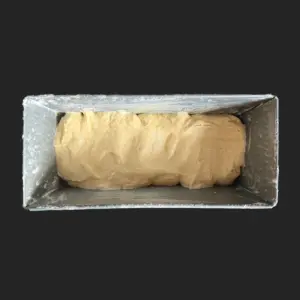
Create the marbled pattern
- Insert a fork vertically into the batter, almost reaching the bottom of the loaf pan. In a few controlled movements, pull the fork upward through the vanilla and cocoa layers while gently twisting it. Move along the length of the pan, making only a few passes so the distinct vanilla and cocoa areas are drawn into each other. Avoid stirring repeatedly in the same spots. Too much movement will blend the two batters and make the marbled pattern less distinct. Lightly smooth the surface afterward.
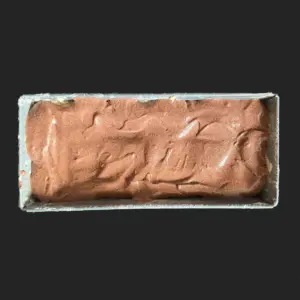
Baking and cooling
- Place the loaf pan on the middle rack of the preheated oven. Bake the marble cake at 180 °C / 350 °F using conventional heat without the fan. After about 25 minutes, briefly remove the pan from the oven and use a sharp knife to make a lengthwise cut about 1 cm / 3/8 inch deep down the center of the cake. Return the pan to the oven immediately and continue baking. The total baking time will be about 50–60 minutes. Starting at about 50 minutes, check the cake with a wooden skewer in at least two places near the center. The cake is done when no wet batter sticks to the skewer. A few slightly moist crumbs are fine. If needed, continue baking in short intervals of about 3–5 minutes and check again. If the top becomes too dark toward the end of the baking time, loosely cover the cake with parchment paper or aluminum foil. The exact baking time may vary slightly depending on the oven and loaf pan. After baking, let the marble cake cool in the pan for 20–30 minutes so the crumb can set and stabilize. Carefully remove the cake from the pan and transfer it to a wire cooling rack. Let it cool completely on the rack for about 2 hours. Apply the chocolate glaze only after the cake has cooled completely. If a small, uneven overhang has formed along one side, it can be carefully trimmed with a sharp knife after the cake has fully cooled. Keep the natural shape of the cake as much as possible.
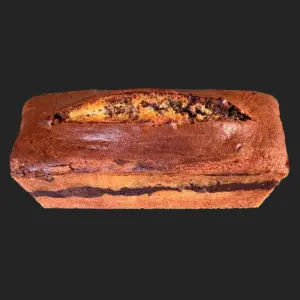
Prepare and apply the chocolate glaze
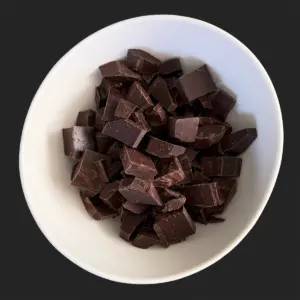
- Finely chop the dark couverture chocolate. Place about two-thirds of the chopped chocolate in a heatproof bowl. Slowly melt it over a warm water bath, making sure the bottom of the bowl does not touch the water. Once the chocolate has completely melted, remove the bowl from the water bath. Add the remaining third of the chopped chocolate and stir until completely melted and smooth. Stir in the 2 tsp rapeseed oil until the chocolate glaze is smooth and evenly combined. Let the glaze stand at room temperature for a few minutes, stirring occasionally. It should still be easy to spread but have slightly thickened.
- Place the completely cooled marble cake on a wire cooling rack and place parchment paper or a baking sheet underneath. Pour about two-thirds of the chocolate glaze over the top of the cake. Use a small offset spatula or spoon to spread the glaze evenly over the surface. Let the first layer set at room temperature for about 10 minutes. Then spread the remaining chocolate glaze over the top. The second layer creates the desired thick, even chocolate coating, especially across the top of the cake. Do not smooth the surface completely. A natural, lightly textured finish is intended. Let the chocolate glaze set completely at room temperature. Do not slice the marble cake until the glaze is firm. For clean slices, use a sharp knife. If needed, briefly dip the knife into hot water, dry it completely, and carefully cut through the chocolate layer and the cake.
Target texture
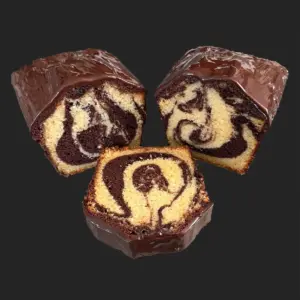
- The marble cake should have a generous rise with a light, fine-textured, yet stable crumb. When sliced, the vanilla and cocoa sections should remain clearly distinguishable. The cocoa batter should remain clearly distinct from the vanilla batter without becoming too dominant or spreading excessively into the lighter batter. Before layering, the vanilla and cocoa batters should have as similar a consistency as possible. This helps both batters hold their shape during baking and creates a clearly defined marbled pattern. The marbling can be natural and irregular. The goal is not a completely blended or predominantly dark interior. The chocolate glaze should form a clearly visible, substantial chocolate layer across the top.
Notes
The cocoa batter should have a consistency as close as possible to that of the vanilla batter. Start with 10 ml whole milk and, if needed, gradually add more, up to a maximum of 30 ml. The cocoa batter should not become noticeably thinner than the vanilla batter.
Starting at about 50 minutes, check the cake with a wooden skewer in at least two places near the center, as different areas of a marble cake may bake at slightly different rates. A few slightly moist crumbs on the skewer are fine.
After baking, let the marble cake cool in the pan for 20–30 minutes. Then remove it from the pan and let it cool completely on a wire cooling rack for about 2 hours. Apply the chocolate glaze only after the cake has cooled completely.
Already tried this recipe?Thank you for your rating.